For laboratory research use only.

Peptides

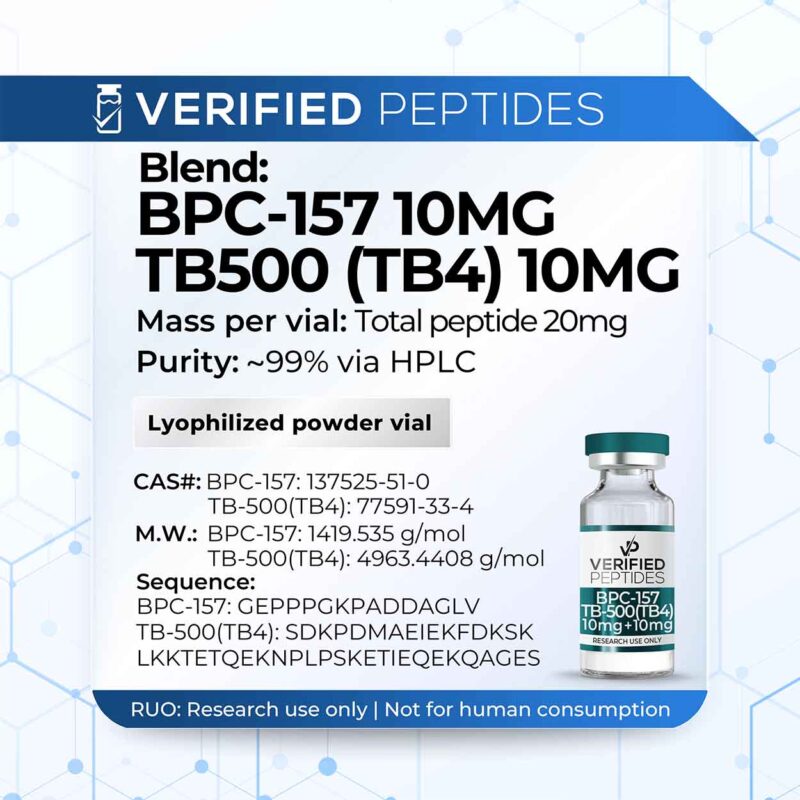
Blend: BPC-157 TB-500 Peptide (20MG)

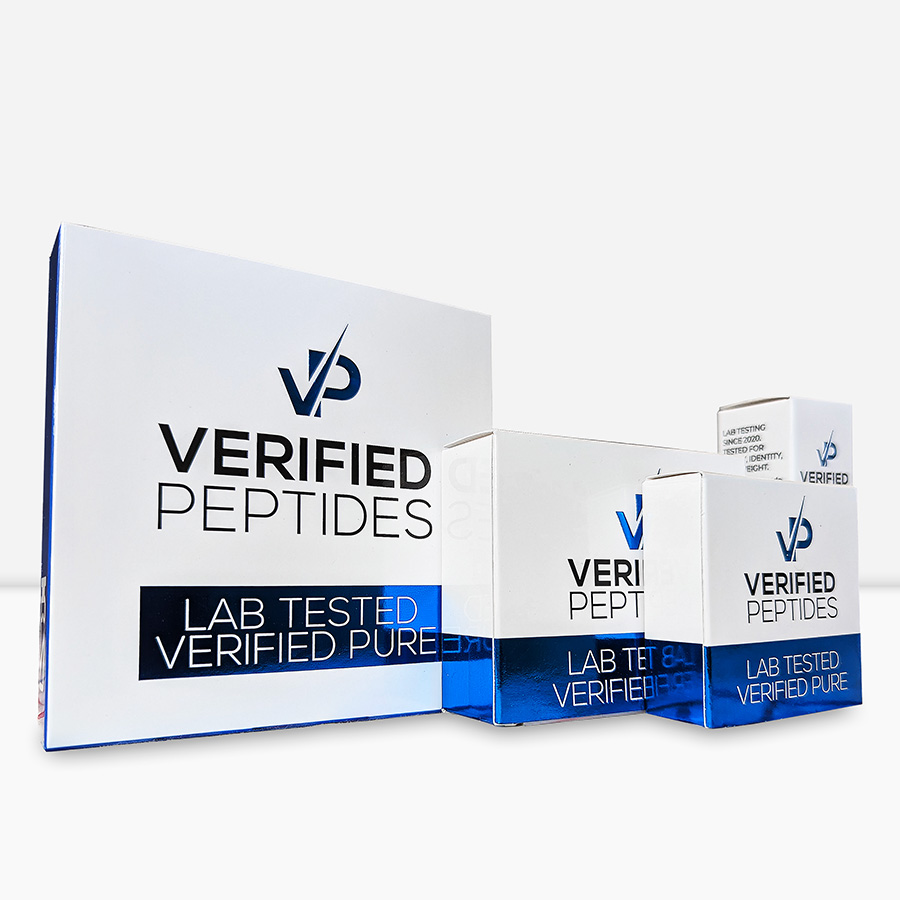
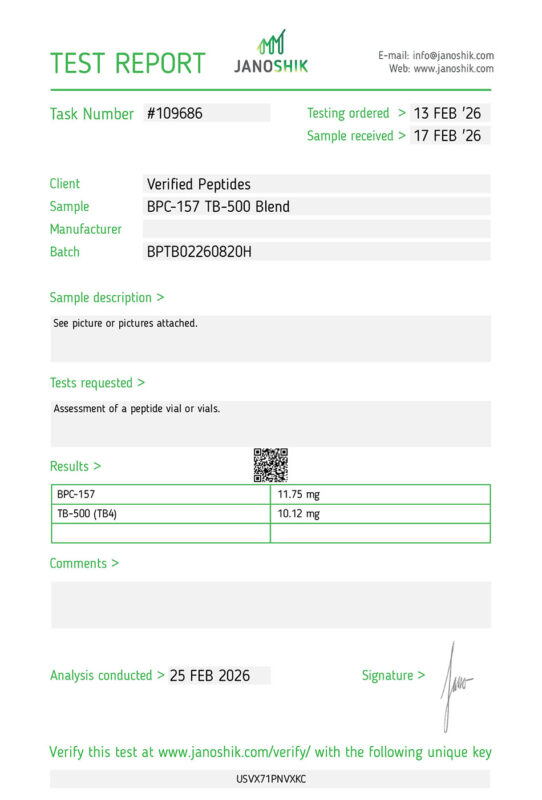
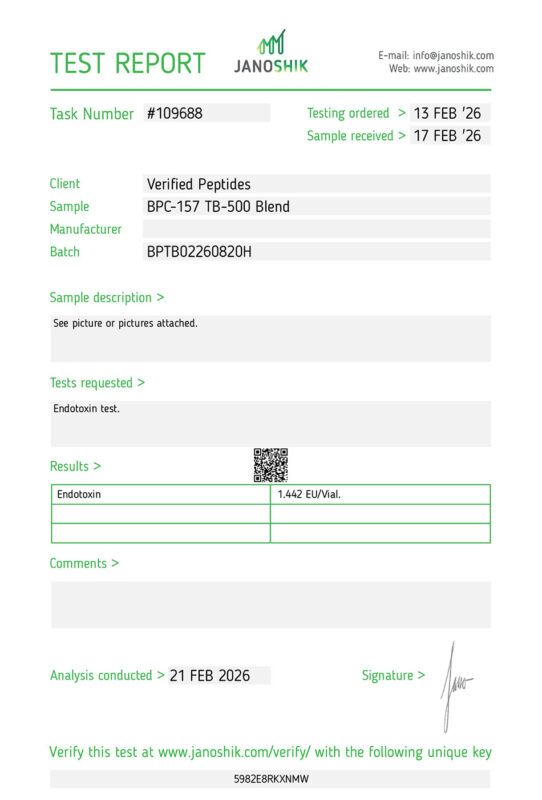
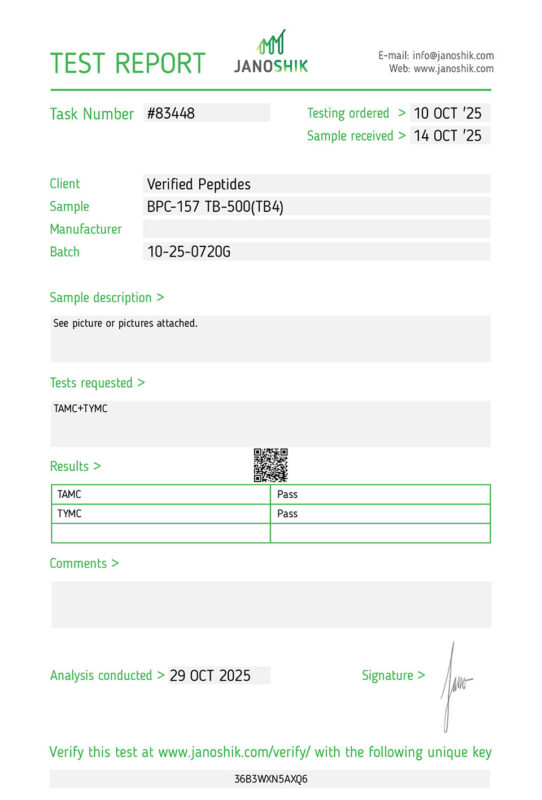
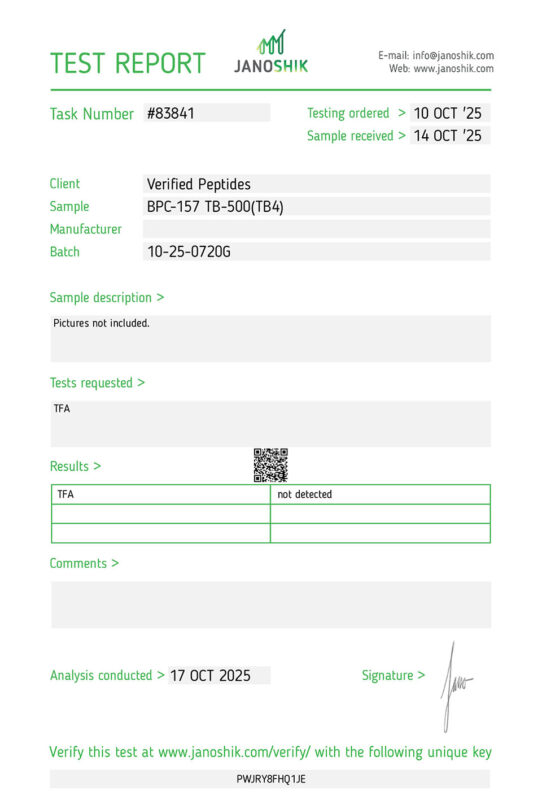
This batch of BPC-157 TB-500 (TB4) Blend has been third party lab tested and verified for quality.

TESTED FOR:

purity

WEIGHT

TFA FREE

STERILITY

ENDOTOXINS(LPS)

$107.00

Dicount Quantity Price
Bulk/tiered discount - sample 1 - 4 $107.00
Bulk/tiered discount - sample 5 - 9 $96.30
Bulk/tiered discount - sample 10 - 24 $90.95
Bulk/tiered discount - sample 25 + $85.60

This product is in powder form and is not reconstituted. All products and materials sold on this site are not for human consumption and subject to our Terms and Conditions.

SHIPS TODAY

Order by 1:00 PM EST

FREE SHIPPING

For orders over $200

ICE PACK SHIPPING

Styrofoam box shipping available

Bottle: vial – sealed – flip top
Vial size: 3ml
Form: powder (lyophilized)
Not reconstituted

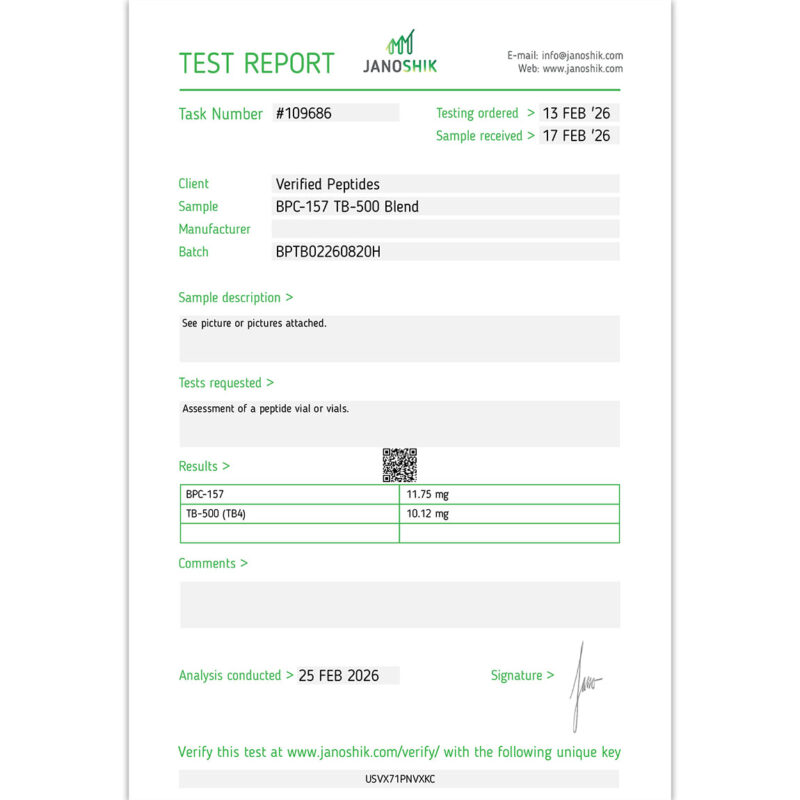
BPC-157 Peptide Test results

Date Tested:

June 08, 2026​

Purity:

~99%​

BPC-157:

11.60mg

TB-500:

11.64mg

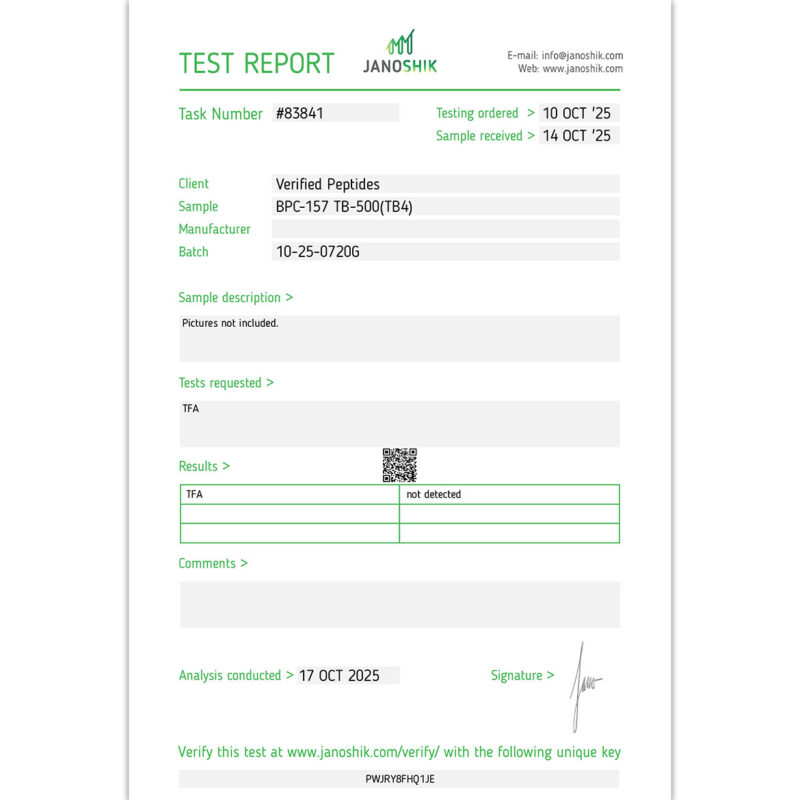
TFA Test:

Not Detected

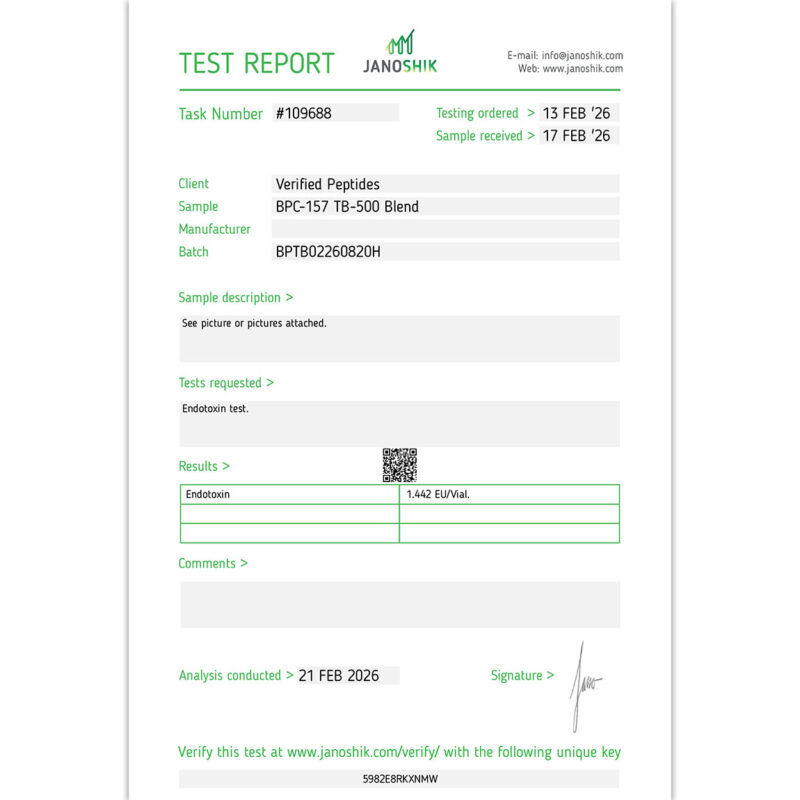
Endotoxins (LPS):

Pass

Sterility:

Pass

Batch #:

BPTB06261020j

BPC-157 Peptide Information

Form

Powder (lyophilized)

CAS NUMBER

BPC-157: 137525-51-0
TB-500(TB4): 77591-33-4

SEQUENCE

BPC157: Gly-Glu-Pro-Pro-Pro-Gly-Lys-Pro-Ala-Asp-Asp-Ala-Gly-Leu-Val TB-500(TB4): Ac-Ser-Asp-Lys-Pro-Asp-Met-Ala-Glu-Ile-Glu-Lys-Phe-Asp-Lys-Ser-Lys-Leu-Lys-Lys-Thr-Glu-Thr-Gln-Glu-Lys-Asn-Pro-Leu-Pro-Ser-Lys-Glu-Thr-Ile-Glu-Gln-Glu-Lys-Gln-Ala-Gly-Glu-Ser

OTHER NAMES

BPC157, TB500, TB-4, tb4, bpc,

WEIGHT

20MG total: BPC157:10mg, TB-500(TB4): 10mg

Molecular Weight

BPC-157: 1419.535 g/mol TB-500(TB-4): 4963.4408 g/mol

Terms

Subject to our Terms and Conditions. This material is sold for laboratory research use only. Not for human consumption, animal, or medical use.

Why isn’t there more information on BPC-157/TB-500(TB4) Blend?

Due to the legal landscape of peptides and research products, providing information that may imply anything beyond laboratory research use is a legal liability. We’re an expert biotechnology company that provides high quality peptides and products for purchase to advance scientific research in this field.

Why Choose Verified Peptides?

The industry’s most trusted source for research peptides

The #1 Leader In Peptide Testing 400+ Certificates of Analysis

What does this mean for you? You can be sure we don’t cut corners on testing every single batch.
Visit our Lab Reports page.

A Long Standing Trusted Company 6+ Years of Peptides

We pioneered third party lab testing and have stood the test of time. Our first lab report dates back to 2019 proving our track record.

The Best $/mg Prices At The Highest Quality

You won’t find this degree of testing and quality at this price.

Peptides Tested For More Than Just Purity

We conduct an array of tests via HPLC and other methods for our peptides:
purity, weight, endotoxins(LPS), sterility (bacteria & mold/yeast), and TFA content. 

Transparency. Trusted. Reliable.

Explore Other High-Purity Peptides

Hear What Our Customers Say

Trusted by thousands of researchers for high-quality peptides

BPC-157 TB-500 Research Studies

Peer-reviewed scientific research findings

🔬 Mechanistic Analysis
Published Studies:
1. Muscle-to-Bone Reattachment Post-Surgical Stable Gastric Pentadecapeptide BPC 157 Therapy for Rats
2. Animal Studies with TB-500 (TB4) for Tissue Repair and Regeneration

BPC-157: Endothelial and Angiogenic Modulator

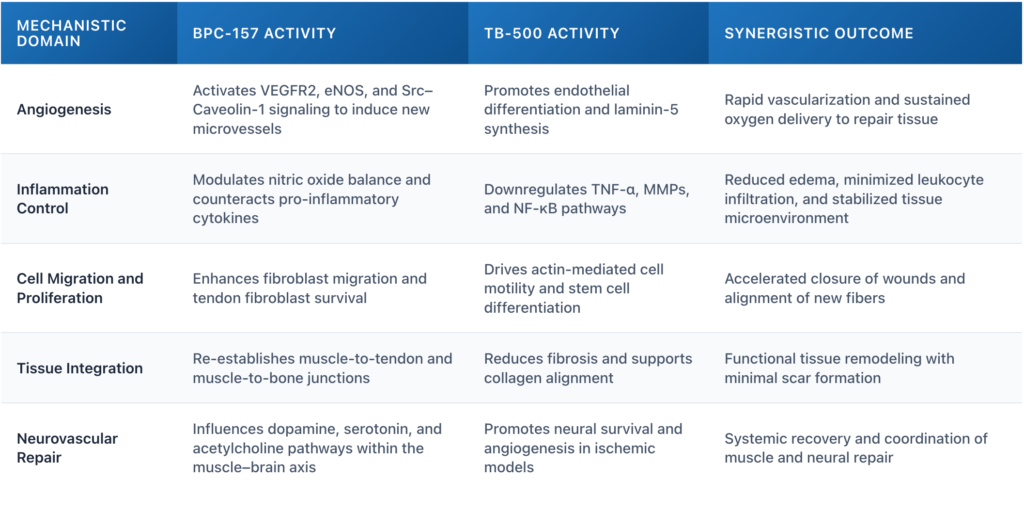
BPC-157, a stable gastric pentadecapeptide, demonstrates a unique ability to repair tissues in animals by activating endothelial repair and angiogenesis pathways. Experimental data show that BPC-157 promotes VEGFR2 signaling and upregulates endothelial nitric oxide synthase (eNOS) through the Src–Caveolin-1 pathway, resulting in improved vasomotor tone and blood flow restoration.
In rat models of quadriceps detachment, BPC-157 accelerated myotendinous and muscle-to-bone junction repair, restoring full muscle function. The peptide enhanced fibroblast migration, osteoblast proliferation, and vascular reorganization, which are essential for bridging muscle, tendon, and bone tissue interfaces.
Moreover, BPC-157’s effects extend systemically: it maintains vascular patency even under ischemic or occlusion-like conditions by rapidly activating collateral microvascular networks, effectively rerouting blood flow and mitigating endothelial injury. Through this, BPC-157 supports both microvascular stability and functional muscle regeneration, creating an optimal environment for tissue recovery.

TB-500: Cytoskeletal and Cellular Migration Regulator

TB-500, the synthetic form of Thymosin Beta-4 (Tβ4), functions primarily through actin-binding and cytoskeletal reorganization. It is a major actin-sequestering peptide present in virtually all mammalian cells and becomes highly concentrated at injury sites, released by platelets and white blood cells.

Unlike traditional growth factors, TB-4 is small, freely diffusible, and not limited to specific receptor targets. It promotes cell migration, angiogenesis, anti-inflammatory regulation, and anti-apoptotic signaling, all critical for wound repair. These processes enable re-epithelialization, endothelial migration, and stem cell differentiation, while also reducing leukocyte infiltration and fibrosis.

In animal studies, systemic TB-500 administration improved cardiac muscle survival post-infarction, enhanced dermal and corneal repair, and reduced inflammatory cytokines in sepsis and neural injury models. Its role in angiogenesis (via endothelial differentiation and laminin-5 production) and cell survival (through Akt and integrin-linked kinase signaling) makes it an essential factor for broad tissue recovery.

Synergistic Mechanisms Between BPC-157 and TB-500

When examined together, BPC-157 and TB-500 complement each other across vascular, cellular, and structural levels of regeneration.

Multiphase Regenerative Synergy

Both peptides exhibit multiphase regenerative synergy in animals:
  • BPC-157 initiates the repair cascade, stabilizing vasculature, limiting oxidative stress, and restoring perfusion.
  • TB-500 follows by amplifying cellular migration, cytoskeletal reorganization, and structural remodeling, completing the repair process.
This coordinated action mirrors natural wound recovery, where vascular repair precedes cellular differentiation and matrix reconstruction. Their combined activity leads to faster recovery, organized collagen architecture, and durable tissue integration.

Conclusion

From the compiled animal studies, BPC-157 and TB-500 together represent a dual-modality regenerative system—BPC-157 drives vascular and endothelial normalization, while TB-500 orchestrates cellular movement and matrix formation. Their non-overlapping but complementary pathways converge on restoring circulation, suppressing inflammation, and rebuilding tissue structure at both micro and macro levels.
In experimental models, this synergy has translated into enhanced repair of tendons, ligaments, muscle-to-bone junctions, and cardiac tissues, with both peptides showing excellent safety profiles. The findings suggest that combined administration could yield superior regenerative outcomes compared to either peptide alone.
 

Frequently Asked Questions (FAQ)

How do BPC-157 and TB-500 work together?

BPC-157 initiates the process by improving blood flow and stabilizing vessels, while TB-500 boosts cell migration and tissue rebuilding. Together, they enhance angiogenesis, collagen repair, and structural regeneration.

What is the difference between BPC-157 and TB-500?

BPC-157 is a gastric-derived peptide that supports vascular and soft-tissue systems. TB-500 is a synthetic version of Thymosin Beta-4 that regulates cell movement and structure. BPC-157 focuses on vascular systems, while TB-500 drives cellular and structural systems.

What are the safety profiles of BPC-157 and TB-500?

In multiple animal and in-vitro studies, both peptides have demonstrated high tolerability and absence of systemic toxicity. BPC-157 showed no adverse effects even under prolonged exposure. Similarly, systemic TB-500 administration in rats, dogs, and primates was well tolerated up to 60 mg/kg intravenously, with no histopathological abnormalities reported.

Do BPC157 TB500 enhance angiogenesis in animals?

Yes. Both peptides promote new blood vessel formation through distinct mechanisms. BPC-157 stimulates VEGFR2 and eNOS pathways, enhancing endothelial growth and microvascular stability. TB-500 activates endothelial differentiation and laminin-5 synthesis, facilitating organized capillary network formation. Their combined angiogenic effects are key to improved oxygenation and nutrient delivery during tissue recovery.

Does research show BPC-157 and TB-500 aid recovery from tendon or muscle injuries in animals?

Yes. BPC-157 accelerates tendon-to-bone and muscle-to-tendon reattachment, while TB-500 promotes myofiber regeneration and fibroblast migration. In combination, they support collagen organization, reduced inflammation, and restored biomechanical strength, particularly in post-surgical or strain-induced injury models.

Are BPC-157 and TB-500 growth factors or hormones?

No. Neither peptide is a growth factor nor a hormone. Unlike growth factors, which act via receptor-specific pathways, BPC-157 and TB-500 function through intracellular signaling modulation and cytoskeletal regulation. This allows them to influence multiple cell types without altering systemic endocrine balance.

Do BPC-157 TB-500 have systemic or localized effects?

Both peptides show systemic bioactivity but act most strongly at sites of injury or inflammation. BPC-157’s angiogenic effects extend throughout the vascular network, while TB-500 diffuses readily across tissues due to its small size and lack of heparin binding. This dual distribution supports both localized tissue repair and systemic regenerative signaling.

Do studies show BPC-157 and TB-500 reduce inflammation or fibrosis in animals?

Yes. BPC-157 reduces oxidative stress and pro-inflammatory cytokine activity, stabilizing vascular endothelium. TB-500 downregulates NF-κB and matrix metalloproteinase (MMP) activity while exerting antifibrotic effects that minimize scar formation. Together, they create a balanced repair response that prevents excessive inflammation and promotes functional tissue remodeling.

📚 Study Reference

Matek D. et al. Pharmaceutics. 2025; 17(1):119.

https://pubmed.ncbi.nlm.nih.gov/39861766/

Ann N Y Acad Sci. 2010 Apr:1194:81-6.doi: 10.1111/j.1749-6632.2010.05479.x.

https://pubmed.ncbi.nlm.nih.gov/20536453/